Nevada's First Wastewater-to-Drinking-Water Plant: What Reno's Breakthrough Could Mean for Las Vegas
Reno just broke ground on Nevada's first direct potable reuse facility, and while that's a northern Nevada story, it carries real weight for Las Vegas homeowners and investors paying attention to long-term water supply. Nevada water recycling Las Vegas residents have relied on for decades is already sophisticated — this new plant confirms the state is expanding that approach.
What the Reno Plant Actually Does
The facility will take water from a treatment plant already cleaning wastewater to irrigation-grade standards, then process it further to drinking-water quality. From there, operators inject it into a groundwater aquifer near Reno's Stead Airport, where it filters naturally for years before the water authority pumps it back out and delivers it through the tap. The plant will handle roughly 2 million gallons per day, reducing Reno's dependence on the Truckee River for its water supply.
This process is called direct potable reuse, and the EPA has tracked it as one of the most promising tools for water-stressed regions. Reno breaking ground is the first time it has been built to this standard in Nevada.
Nevada Water Recycling Las Vegas Already Leads On
Las Vegas has run one of the most effective water recycling systems in the country for years. The Southern Nevada Water Authority returns nearly all indoor water used in the valley back to Lake Mead, where it counts against the region's Colorado River allocation. That return-flow credit system is a large reason Las Vegas has reduced its per-capita water use significantly even as the metro has grown.
Reno's plant operates differently — it recycles water before it ever reaches Lake Mead — but both systems point to the same commitment. Nevada is not waiting on outside solutions. The state is building them.
For Henderson residents and Las Vegas property owners, that matters. Water availability is one of the most common concerns we hear from buyers relocating from other states, and from investors evaluating long-term viability. The Reno plant adds credibility to Nevada's overall water management story.
What This Means For You
• Nevada's investment in water recycling infrastructure strengthens the case for continued development and population growth in the Las Vegas valley over the next 20 to 30 years.
• Buyers comparing Las Vegas to Phoenix or other Sunbelt cities should factor in Southern Nevada's return-flow credit system, which sets this market apart in Colorado River negotiations.
• Investors holding rental or commercial property in the valley can point to statewide water innovation as evidence the region's growth is built on more than borrowed time.
• If you own property in Las Vegas and are thinking about what supports your home's long-term value, water infrastructure belongs in that conversation alongside jobs, population trends, and housing supply. Find out what your home is worth →
Reno's groundbreaking is a reminder that Nevada takes water seriously at every level of government and utility management. Las Vegas didn't build its recycling leadership by accident, and it has not stopped improving it. For anyone deciding whether to buy, hold, or invest here, that track record is worth understanding.
Explore more about living and investing across the valley on our Las Vegas community pages.
Frequently Asked Questions
Does Las Vegas already recycle its water?
Yes. The Southern Nevada Water Authority returns nearly all indoor-use water to Lake Mead through the regional sewer system, and those return flows count as credits against the region's Colorado River allocation. This system has allowed Las Vegas to grow its population while actually reducing total water withdrawals from the river.
How does Nevada water recycling affect Las Vegas property values?
Water availability is a foundational factor in regional growth capacity, and growth capacity supports property values over time. Las Vegas's established recycling system and Nevada's expanding investments in direct potable reuse reduce the risk that water constraints will cap development or population growth, which is a positive signal for long-term real estate fundamentals.
Is the Las Vegas valley at risk from Colorado River water cuts?
The Southern Nevada Water Authority has publicly stated that its return-flow credit system makes the Las Vegas valley more resilient than most Colorado River users to shortage-level cuts. Because Las Vegas recycles indoor water back into the river, it draws far less net water than its gross allocation suggests. State and federal negotiations continue, but Southern Nevada's position is stronger than many other regional users because of this recycling infrastructure.
Sources
• Southern Nevada Water Authority
• U.S. Environmental Protection Agency (EPA)
• Truckee Meadows Water Authority
Related reading
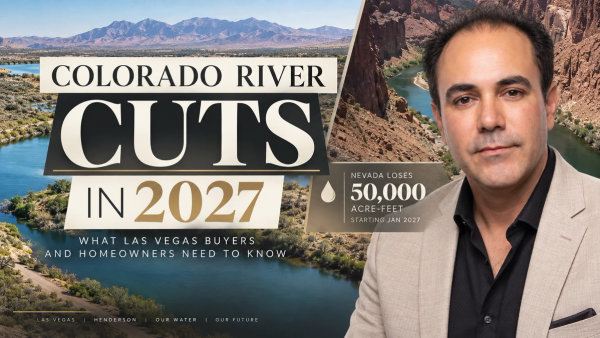
• Colorado River Cuts Are Coming in 2027 — What Las Vegas Homeowners and Buyers Need to Know
• Henderson City Officials Under Scrutiny: Why Transparency in Local Government Matters to Homeowners
Nevada's First Wastewater-to-Drinking-Water Plant: What Reno's Breakthrough Could Mean for Las Vegas — in under a minute
Homes for Sale
.webp)


Ready to Find Your
Next Home?
The Crighton Rinaldi Team specializes in luxury real estate across Las Vegas and Henderson. Let’s find the right home, and neighborhood, for you.
← All Blog Posts